
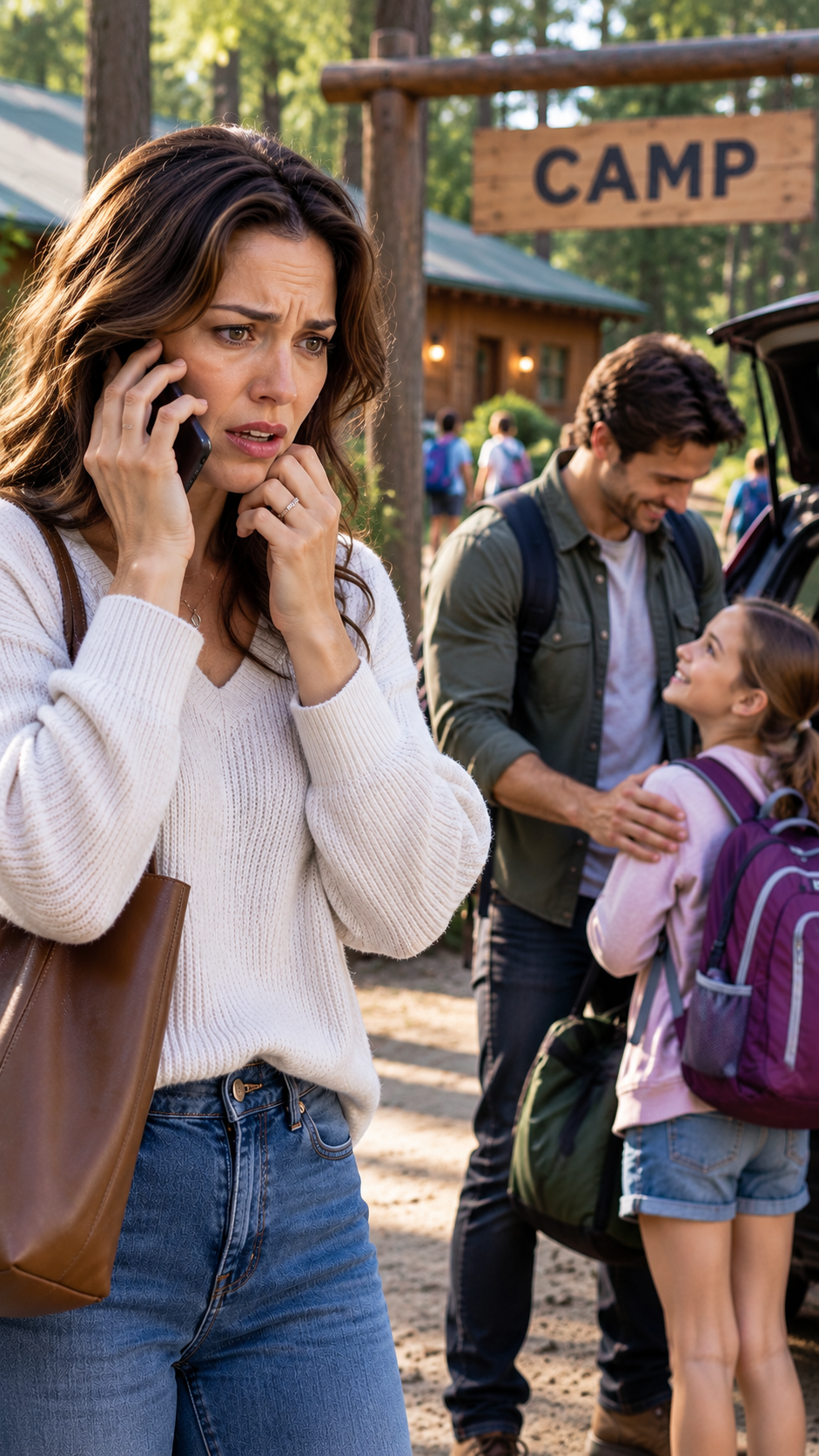
I have spent ten years learning how to recognize trouble before it announces itself. As a nurse, I notice the small things first: a patient who suddenly stops making eye contact, a hand that trembles when it didn’t before, a family member who says “I’m fine” too quickly. As a mother, I thought I had the same instinct. I thought I could read every change in my daughter.
That morning, I was wrong.
Greta was ten years old, and she had been counting down to summer camp since March. She had circled the first day on the kitchen calendar in purple marker and crossed off each morning with the seriousness of someone preparing for a mission. Three days before departure, she had already packed her duffel bag.
She had even labeled the inside of her socks.
I teased her about it while making breakfast, holding up a pair covered in tiny yellow stars.
“You know they aren’t going to disappear if you leave them unlabeled.”
She smiled, but only for a second.
“I know.”
Normally, Greta would have launched into a detailed explanation of why the socks mattered, which bunk she hoped to get, and whether the dining hall really served pancakes on the first morning. Instead, she pushed cereal around her bowl and stared at the milk.
I watched her from across the kitchen.
“You excited?”
“Yeah.”
The answer came too quickly.
I leaned against the counter. “That sounded convincing.”
She finally looked at me and gave a little laugh. “I am excited.”
Then she lowered her spoon.
“Mom?”
“Hmm?”
“If somebody gets sick at camp, can their parents come get them?”
The question was ordinary enough that I almost dismissed it.
“Of course. Why?”
She shrugged.
“I was just wondering.”
“Are you feeling sick?”
“No.”
“Scared?”
“No.”
She said that one more quietly.
I wanted to ask again. I should have asked again. Instead, I glanced at the clock and realized I was already behind schedule.
“Eat your breakfast. We’ve got a busy morning.”
She nodded.
At the time, I told myself the question was nothing more than nerves. Greta had never spent that much time away from home before. She was brave in ways that surprised me, but being brave did not mean being fearless.
That explanation became easier to believe over the next few days because she continued acting almost normal.
Almost.
On Thursday, I found her sitting on the bedroom floor surrounded by clothes.
She had packed the duffel.
Then unpacked it.
Then packed it again.
“You’re doing that thing where you make a simple problem harder,” I said from the doorway.
She looked up.
“I forgot my blue shirt.”
“You packed three shirts.”
“I know.”
“Then what’s the problem?”
She stared at the bag.
“Nothing.”
There was that word again.
Nothing.
I walked over and sat beside her.
“You know you can tell me if you changed your mind about camp.”
“I didn’t.”
“You can be nervous.”
“I’m not.”
“You can be scared.”
She shook her head.
“I want to go.”
I believed her.
That was the mistake.
Saturday morning arrived before either of us seemed ready for it. The house smelled like toast and coffee, and sunlight fell across the hallway floor in long pale rectangles. Greta wore the new camp T-shirt she had chosen herself. Her hair was tied back, and her glasses kept sliding down her nose.
She looked small beneath the weight of her backpack.
I was fastening the front pocket of her bag when my phone rang.
The hospital.
I knew before answering that it was bad news. Saturday staffing was always fragile, and lately it seemed as if every shift began with someone calling out sick.
“Hello?”
My supervisor sounded exhausted.
Two nurses had called out. They needed me immediately.
I looked at Greta.
She was standing by the front door with her duffel at her feet.
“I’m supposed to take my daughter to camp.”
“I know,” my supervisor said. “I’m sorry. We’re completely short.”
I closed my eyes.
For a few seconds, neither of us spoke.
Then I said, “Give me twenty minutes.”
When I hung up, Greta was watching me.
She had understood everything from my face.
“You have to go to work,” she said.
“I have to go in early.”
Her shoulders dropped.
“It’s okay.”
“I’ll figure something out.”
“I can stay home.”
The sentence came out so quickly that I almost missed it.
I crouched in front of her.
“What?”
“I said I can stay home.”
Her fingers tightened around the strap of her bag.
“I don’t have to go.”
I smiled, trying to make the moment lighter.
“Absolutely not.”
She looked down.
“You’ve been talking about camp for months.”
“I know.”
“And you are going.”
She swallowed.
“I don’t want you to be late.”
That softened me.
I pulled her into a hug.
“You’re not responsible for my shift.”
She hugged me back, but something about it felt different. She held on longer than usual.
I noticed.
I did.
But my phone buzzed again in my pocket, reminding me that somewhere across town, patients were already waiting.
That was when Owen knocked on the door.
He barely waited for an answer before coming inside.
He had been doing that for years. He knew where we kept the spare key. He knew which kitchen drawer jammed. He knew Greta’s favorite cereal and the fact that she hated having her hair brushed when it was wet.
He was the friend who had stayed late when my shifts ran over.
The friend who remembered Greta’s birthday without needing a reminder.
The friend who had once sat through an entire school play where his knees were pressed against a folding chair for two hours because Greta had asked him to come.
I trusted him.
More than almost anyone.
He took one look at me and said, “You’re going to the hospital.”
It wasn’t a question.
“I have to.”
“I’ll take her.”
I hesitated.
“You know it’s forty minutes in the opposite direction.”
“I know.”
“Owen—”
“I’ll take her.”
His voice softened.
“You go do your job. I’ll make sure she gets there.”
Greta looked at him.
Then at me.
“I can take her,” he repeated.
The practical part of my brain knew he was right.
The exhausted part of me was relieved.
I knelt again and adjusted Greta’s backpack.
“You good?”
She nodded.
But she wasn’t smiling.
I kissed her forehead.
Her glasses shifted sideways.
“Have fun.”
She wrapped both arms around my neck.
“Okay.”
I stood, grabbed my purse, and headed toward the door.
For half a second, I almost turned around.
I almost asked her why she had wanted to stay home.
Instead, I opened the door.
“Love you.”
“Love you too.”
Owen picked up her duffel.
“I’ve got her.”
I believed him.
Then I left.
And for the next few hours, I would keep believing that everything was exactly as it appeared.
Click here to continue reading: PART 2: Owen Sent Me a Reassuring Message From Camp, So I Returned to My Shift Believing the Hardest Part of the Morning Was Already Over
My Daughter Had Packed for Camp Days Early, Yet One Quiet Question Made Me Wonder What She Was Trying So Hard Not to Tell Me
Part 1 of 12

