I used to believe that if you loved your family enough, eventually they would learn how to love you back.
I was wrong about that.
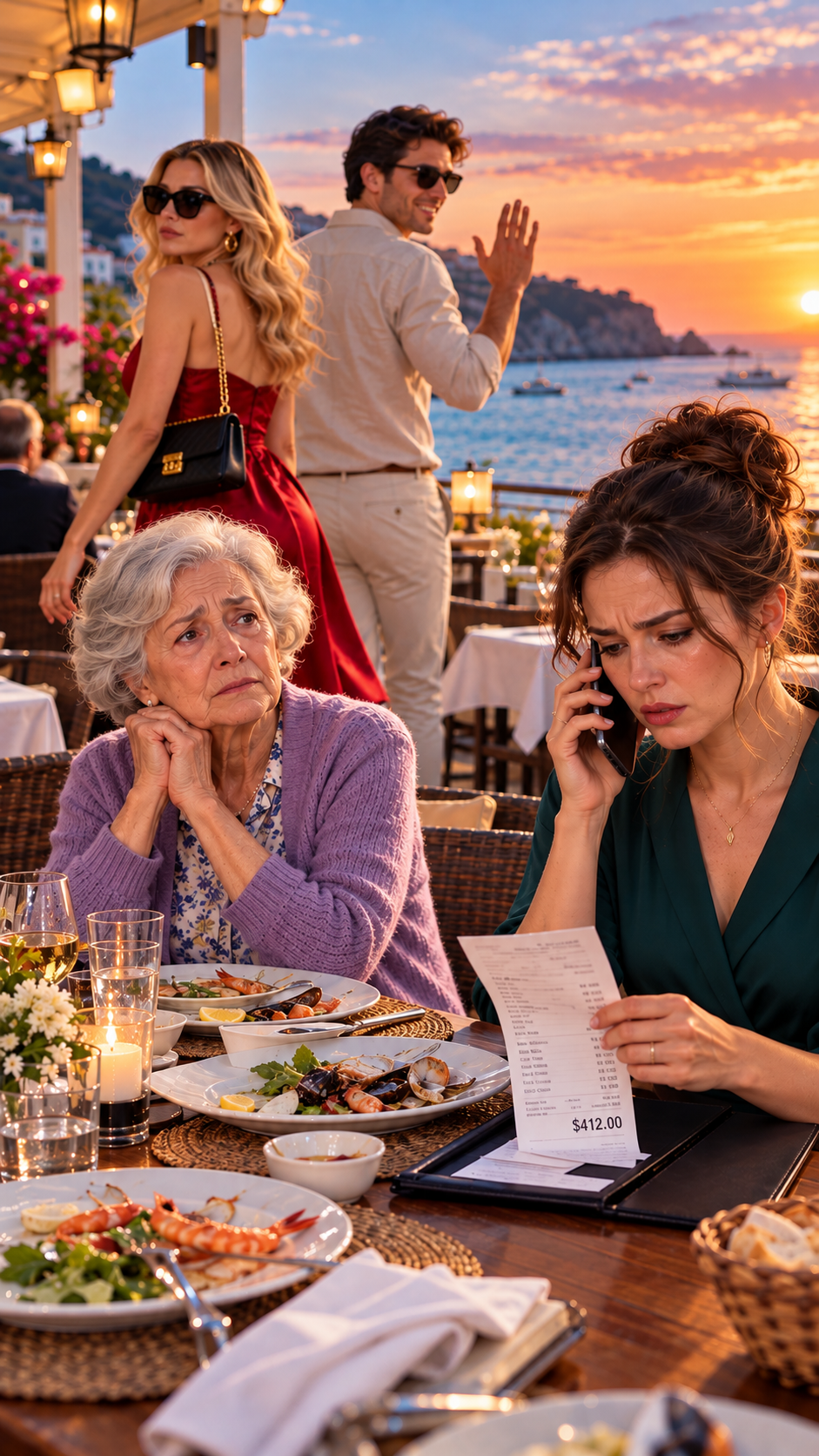
I learned it on a Friday evening when my eighty-one-year-old grandmother sat alone in a seaside restaurant, wearing her best dress and wondering what she had done to deserve being left behind.
Her name was Rose Bennett.
My name is Anna Marshall, and I was thirty-six years old at the time.
I lived in Charleston, South Carolina, close enough to the coast that the smell of salt sometimes followed me home on windy afternoons.
Grandma Rose had lived through enough disappointments to know that people did not always keep their promises.
Still, she believed in giving them another chance.
Especially when they were family.
That belief had cost her more than she ever admitted.
My step-siblings, Paige and Trevor, had been part of my life since I was fifteen.
That was when my father, Thomas, married their mother, Linda.
Everyone acted as though our new household would become one big, happy family simply because the adults had signed papers and moved into the same home.
It never happened that way.
Paige and Trevor had grown up together.
They shared childhood memories, private jokes, and a thousand little references that made sense to them and nobody else.
I was the new girl who was expected to fit into a life that had already been arranged.
I tried.
I really did.
I attended their birthdays, remembered important dates, and learned which subjects to avoid when conversations became uncomfortable.
Over time, I stopped expecting us to become close.
We were polite at family gatherings.
We exchanged holiday greetings.
When something important happened, we usually heard about it through our parents.
That was the relationship we had built.
Not hatred.
Not affection, either.
Something in between.
Grandma Rose never seemed to notice those invisible divisions.
Or perhaps she noticed them and refused to accept them.
She treated Paige and Trevor as if they had been her grandchildren from the day they entered the family.
She remembered Paige’s favorite chocolate pie.
She knew Trevor preferred peach cobbler.
When Trevor broke his wrist years earlier, Grandma brought him homemade soup and stayed long enough to make sure he had everything he needed.
When Paige graduated from college, Grandma sat in the audience clapping so enthusiastically that I could hear her over the people around me.
Nobody had asked her to do those things.
She simply did them.
Grandma had a way of making people feel remembered.
She asked about the little details other people forgot.
She noticed when somebody was quiet at dinner.
She remembered the name of a person you had mentioned only once, months earlier.
She believed that family was not something you proved by sharing blood.
It was something you proved by showing up.
I understood that lesson long before I understood how often people would take advantage of it.
A few days before the restaurant incident, Paige called me.
I was at home, looking over some work documents, when her name appeared on my phone.
We did not usually call each other without a reason.
“Anna, Trevor and I have an idea for Grandma.”
I moved the papers aside.
“What kind of idea?”
“We’re taking her out for dinner on Friday.”
I waited for the rest.
Paige explained that they had chosen a restaurant overlooking the ocean.
They wanted to do something nice for Grandma because she had always been there for them.
I was surprised.
Not because I thought they were incapable of kindness.
I simply wasn’t used to hearing Paige talk about doing something for Grandma without somebody else organizing it.
“That sounds lovely,” I told her.
And I meant it.
Grandma had loved the coast for as long as I could remember.
When my grandfather was alive, they used to spend afternoons near the water, eating simple lunches and watching the boats pass.
She had told me those stories so many times that I could picture them without ever having seen every place she described.
My grandfather had been gone for years, but Grandma still spoke about him as if some part of him remained close whenever she heard waves breaking against the shore.
I thought dinner by the ocean might make her happy.
Paige mentioned that she had originally planned to invite me.
Unfortunately, I had an important meeting scheduled for that afternoon.
I asked whether they could move the dinner to Saturday instead.
There was a brief silence.
Then Paige sighed.
“Anna, we don’t have to arrange everything around your schedule.”
I stared at the papers on my desk.
“I wasn’t asking you to arrange everything around me. I just thought it might be nice if we could all go together.”
“Trevor and I can take Grandma out by ourselves.”
“Of course you can.”
I tried to keep my voice even.
I did not want to turn an ordinary family conversation into another argument about who belonged where.
Still, something in her tone bothered me.
She sounded less like someone planning a pleasant evening and more like someone annoyed that I had asked a question.
Before we hung up, I brought up the part that mattered most to me.
“You’re paying for Grandma, right?”
I knew her well enough to know she would never willingly spend hundreds of dollars on a single meal.
Grandma was generous with other people and careful with herself.
She could spend an hour deciding whether she really needed a new cardigan.
If she bought a gift for somebody, she would often skip something she wanted so she could afford it.
I had seen her do that for years.
Paige sounded offended that I had even asked.
“Obviously. We’re grown adults, Anna. We understand how paying for dinner works.”
I felt embarrassed.
Looking back, I wish I had paid more attention to the discomfort that followed that answer.
Instead, I accepted it.
I wanted to believe Paige was telling the truth.
I wanted to believe that she and Trevor had decided, without prompting, to give Grandma an evening she would remember fondly.
So I told Paige to have a wonderful time.
Three days later, Grandma called me while she was getting ready.
I could hear the soft movement of hangers in the background.
She was choosing between two pairs of shoes.
“Sweetheart, do you think my pearl earrings are too much for dinner?”
I smiled.
“Not at all. Wear them.”
“They might be a little fancy.”
“Grandma, you deserve to look fancy.”
She laughed.
Then she told me she planned to wear her blue dress.
It was the one my grandfather had always complimented.
The dress was simple, with a modest neckline and sleeves that reached just above her elbows.
I remembered it from family photographs.
Grandma had worn it to birthdays, anniversaries, and at least one wedding where she spent more time making sure everyone else was comfortable than enjoying the celebration herself.
“That dress is perfect,” I told her.
She sounded pleased.
“I wish you were coming, too.”
“I wish I could be there. We’ll have our own dinner next week.”
“Somewhere by the water?”
“Somewhere with a beautiful view.”
She agreed that sounded like a wonderful plan.
Then she reminded me that she intended to save me a piece of lemon cake if the restaurant had any.
That was Grandma.
Even when somebody else was taking her out, she was already thinking about what she could bring home for me.
I went back to work feeling better about the evening.
For once, I thought, Paige and Trevor were making an effort.
I had no idea how quickly that feeling would disappear.
Just before six o’clock, my phone rang while I was in a meeting.
I glanced at the screen.
Grandma.
I excused myself and stepped into the hallway.
At first, I expected another question about the restaurant or her outfit.
Instead, I heard a voice I barely recognized.
“Anna, honey, can you help me?”
Her words were unsteady.
I straightened immediately.
“Grandma? What’s wrong?”
She took a breath.
I could hear people talking somewhere behind her, along with the faint clatter of dishes.
“Paige and Trevor went outside.”
I waited, trying to understand why that was a problem.
“They said they needed to get something from the car,” she continued. “But they haven’t come back.”
My first thought was that there had been some small misunderstanding.
Maybe they had gone to move the car.
Maybe one of them had received an urgent call.
Maybe the restaurant had a parking problem.
There were a dozen harmless explanations.
“How long have you been waiting?”
“Almost forty minutes.”
I stopped moving.
Forty minutes.
“Have you tried calling them?”
“Both of them, sweetheart. Several times.”
“Did either one answer?”
“No.”
Her voice became quieter.
Then she told me the part she had been trying not to say.
“The waiter brought the bill.”
I closed my eyes for a moment.
“How much is it?”
She hesitated.
“Four hundred and twelve dollars.”
I felt the blood drain from my face.
Grandma explained that she had only around forty dollars in her purse.
She had not expected to pay for dinner.
She had not even expected to pay for everyone to have drinks.
She had believed Paige and Trevor when they told her they were treating her.
Now she was sitting at a table she could not afford, in a restaurant where she did not know what to do next.
“Grandma, listen to me.”
I forced my voice to remain calm.
“I’m coming to get you.”
“But you’re working.”
“I can leave work. You don’t need to worry about that.”
“I don’t want to cause trouble.”
Those words hurt more than the amount on the bill.
She was eighty-one years old.
She had been invited out by her own grandchildren.
And somehow, she was the one apologizing for needing help.
“You’re not causing trouble,” I told her. “Stay where you are. I’ll be there as soon as I can.”
She agreed, although I could hear that she was still frightened.
I returned to the meeting room long enough to explain to my supervisor that there was a family emergency.
Then I grabbed my things and headed for the parking lot.
As I drove, I called Paige.
No answer.
I called Trevor.
Nothing.
I tried Paige again.
Still nothing.
I sent them both a message explaining that Grandma was sitting alone at the restaurant with the bill and needed them to call me immediately.
The messages showed that they had been read.
Neither responded.
I watched the road, my hands tight around the steering wheel.
There were still explanations I wanted to believe.
I told myself they might be dealing with something unexpected.
I told myself they could be on their way back.
I even considered whether Grandma might have misunderstood what they had said.
But the longer I drove without hearing from either of them, the harder it became to maintain those excuses.
By the time I reached the restaurant, I had stopped looking for an innocent explanation.
I just wanted to get Grandma out of there.
And I wanted to know why the two people who had promised to treat her had left her sitting alone.
Source: lessoninlife.net
Click here to continue reading: PART 2: The Receipt Told Me What They Had Eaten, but My Grandmother’s Apology Revealed What Their Cruelty Had Cost Her
The Blue Dress, the Empty Chairs, and the Four Hundred Dollars Nobody Had Warned My Grandmother She Would Owe
Part 1 of 12