I used to believe that if you loved your family enough, there would always be a place for you at their table.
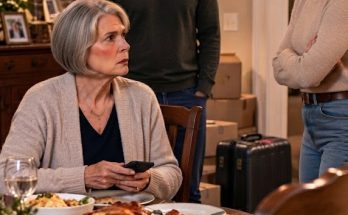
Then, four days before Christmas, my daughter-in-law told me there wasn’t one for me anymore.
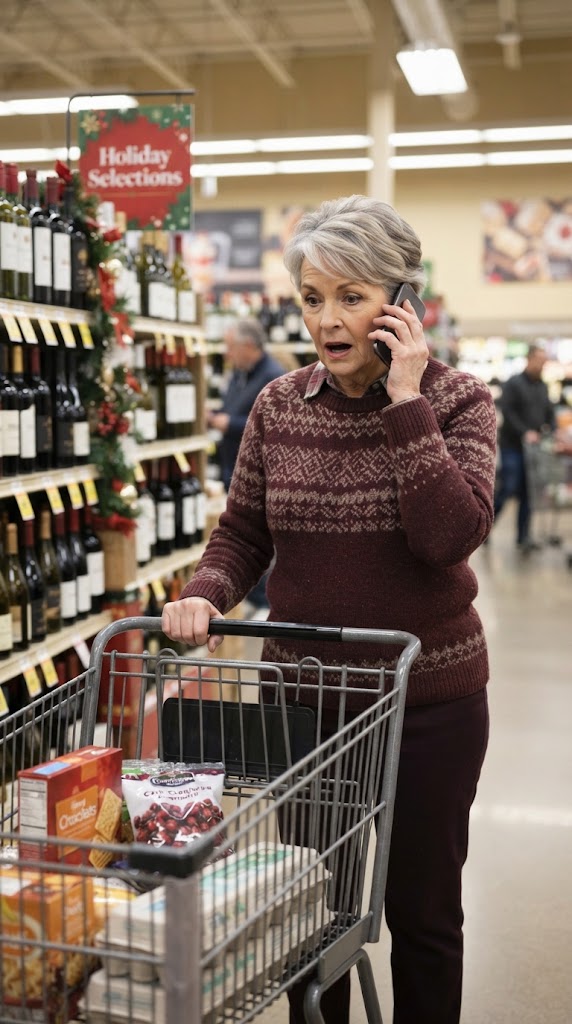
I was standing in the grocery store when she called.
My cart was nearly full, and I had two packages of fresh thyme in my hand.
“Joanne, we’ve changed our plans for Christmas,” Renee said.
I waited for her to explain.
“We’re going to spend it with my family this year. There’s no need for you to come over.”
For a moment, I thought I’d misunderstood.
“What about Adam’s invitation? He asked me to come weeks ago.”
“We’ve talked about it,” she replied. “He knows we’re doing things differently.”
That was all.
No apology. No explanation that made sense.
I stood between the shelves, listening to the ordinary sounds of people shopping for their holiday meals.
Someone was asking a child to put a box of cookies back.
A cart rattled behind me.
I was still holding the thyme.
“All right, Renee,” I said. “Have a Merry Christmas.”
I ended the call before she could hear how my voice had changed.
My name is Joanne Kessler. I was sixty-two years old, and my husband, Walter, had been gone for two years.
We had been married for thirty-six years.
I had always thought that losing him would be the hardest thing I would ever have to endure.
I was wrong about that, too.
Grief had made the house quieter, but I had learned to live with the silence.
I still made coffee for one.
I still reached for the second mug sometimes.
And every December, I still prepared for Christmas as though Walter might walk through the door wearing his battered red Santa hat.
He had loved that hat.
He wore it while handing out presents, announcing each name in an exaggerated voice that made our son laugh.
Our grandchildren, Lily and Noah, had inherited the tradition.
Lily was ten. Noah was seven.
They thought their grandfather’s gift announcements were the funniest part of Christmas.
I kept the hat in the hall closet, folded inside a plastic storage bag.
I couldn’t bring myself to throw it away.
I couldn’t bring myself to wear it, either.
Until that afternoon, I had assumed this Christmas would be much like the previous ones.
Adam and Renee would host.
The children would make a mess of the wrapping paper.
I would bring my pecan pie.
We would all pretend that the empty chair Walter used to occupy wasn’t quite so noticeable.
At Thanksgiving, Adam had invited me himself.
“Come over around noon on Christmas Day, Mom,” he had said. “We’ll do what we usually do.”
I had written it on the kitchen calendar.
December 25.
Noon.
Adam’s house.
I was not a woman who needed grand gestures.
An invitation from my son was enough.
So I had bought clementines for Lily, Noah’s favorite yellow mustard, and everything I needed for my pecan pie.
I had even picked up Adam’s preferred cranberry sauce.
Now those groceries sat in my cart, and I couldn’t think of a single reason to finish shopping.
I pushed the cart toward the checkout anyway.
The total came to $87.40.
I paid, carried the bags outside, and loaded them into my Buick.
The cold air stung my face.
I got behind the steering wheel but didn’t start the engine.
I kept thinking about Renee’s words.
There’s no need for you to come.
Not, “I’m sorry, Joanne.”
Not, “Something came up.”
Just a decision that apparently had already been made without me.
I wanted to call Adam immediately.
I wanted him to explain why he had invited me if he was going to let his wife cancel the invitation.
Instead, I took out my phone and sent him a message.
Renee says the Christmas plans have changed. Please call me when you can.
I stared at the screen.
I nearly added another sentence.
I was hurt, Adam. I thought I was part of your family.
I deleted the words before typing them.
I didn’t want to beg my own son to remember me.
That thought embarrassed me as soon as it entered my mind.
A mother shouldn’t have to beg.
But I was also old enough to know that families could hurt each other without always understanding the damage they caused.
I started the car.
I should have driven straight home.
Instead, I turned toward the Westdale Community Resource Center.
I hadn’t planned to visit that day.
The center had been part of Walter’s life for six years, especially after he retired from the postal service.
Every Tuesday and Thursday, he went there to help people who needed something repaired, groceries delivered, or a ride to a medical appointment.
He could fix a cabinet door with the patience of a professional carpenter, although he never considered himself particularly skilled.
He could also spend an entire afternoon listening to a stranger explain a problem that nobody else had time to hear.
He always came home tired.
He always came home smiling.
After he died, I rarely visited Westdale.
It wasn’t because I disliked the place.
It was because I could still picture him walking through the entrance with his sleeves rolled up and his lunch packed in an old paper bag.
I wasn’t sure I could bear seeing the place without him.
That afternoon, however, I needed somewhere to go.
I carried the grocery bags through the familiar front doors.
Clare, the center’s director, was sorting donated food near the reception desk.
She looked up and smiled.
“Joanne! I haven’t seen you in ages.”
“I know. I brought some groceries.”
She glanced at the bags.
“Are you helping with a collection?”
“Not exactly. My dinner plans changed.”
The words came out more bitterly than I intended.
Clare noticed.
She didn’t ask me to explain.
She simply put down the box she was holding and reached for her coat.
“Let’s see what we can use.”
We carried the food into the storage area.
Some of the sealed packages and fruit could be accepted, while the refrigerated items had to be handled according to the center’s food-safety rules.
Once we had sorted everything, I found myself lingering beside the door.
I could have gone home.
Instead, I asked whether there was anything else that needed doing.
Clare smiled again.
“There always is.”
For the next hour and a half, I worked alongside the volunteers.
I stacked cans, arranged pasta boxes, sorted fruit, and helped clear space for incoming donations.
Nobody asked why I was there.
Nobody told me I was in the way.
They simply handed me the next box.
It was a small thing.
But after the phone call in the grocery store, being useful felt better than sitting alone with my thoughts.
I was carrying a carton toward the storage room when I noticed the cabinet.
It stood against the far wall, made of gray metal, with a door that had once refused to close properly.
Walter had spent two afternoons repairing it.
I remembered him complaining about the hinges at dinner, then returning the next morning with a screwdriver and a fresh determination to finish the job.
Someone had taped a paper snowflake to the cabinet.
Beneath it, a strip of masking tape carried a handwritten label.
WALT’S CABINET.
I stopped walking.
The carton rested against my hip.
I looked at those two words until my eyes began to burn.
Walter had been gone for two years, yet somebody had taken the time to make sure his name remained there.
I hadn’t expected that.
“Gus put the label on,” Clare said quietly behind me.
I turned.
“He thought Walt deserved to stay part of the place.”
I nodded, but I couldn’t answer.
Clare took the carton from my arms and led me into her office.
There was a photograph hanging on the wall.
Walter was in it, laughing while carrying a folding table at a community picnic.
His hair was untidy.
His shirt was wrinkled.
He looked happier than I remembered seeing him during his final year.
I hadn’t known the photograph existed.
“He did a lot for people here,” Clare said. “We still talk about him.”
I sat down and studied his face.
For a moment, the grocery store, the canceled invitation, and the empty Christmas calendar seemed very far away.
I remembered the way Walter had spoken about people who were struggling.
He never asked whether they had made the right decisions.
He asked what they needed.
That was when I thought about the money.
Not the groceries.
Not the Christmas presents I had already bought.
The money from the collection Walter had spent nearly thirty years building.
Thirty-one thousand dollars.
I had been carrying that number around in my mind for months, wondering what the right thing to do with it might be.
Now, looking at Walter’s photograph, I thought I finally knew.
And I decided to ask Clare a question that would change the rest of our Christmas.
Source: kaylestore.net
Click here to continue reading: PART 2: The Money My Son Thought Would Be His Was Sitting in My Account, Waiting for Me to Decide What It Meant
My Daughter-in-Law Took Christmas Away From Me, and I Had No Idea What My Son Was Hiding
Part 1 of 12