We spoke several days later.
My father called in the late afternoon.
I was at home, sitting near the window with a cup of coffee beside me.
I had chosen a quiet time because I didn't want to rush the conversation.
When I answered, neither of us spoke immediately.
Then he asked how I was.
It was an ordinary question.
I almost didn't know how to respond.
“I'm well,” I said.
He told me he was glad to hear it.
We exchanged a few more words about work and the wedding.
The conversation felt stiff.
I could hear him choosing his sentences carefully.
So was I.
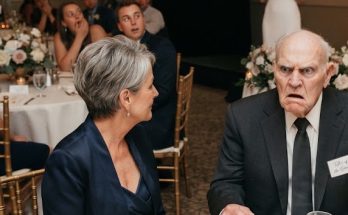
Eventually, he brought up the reception.
He said he hadn't intended to embarrass me.
I told him that his intention wasn't the only thing that mattered.
He paused.
“I was concerned about how your presence would affect the family.”
I closed my eyes briefly.
Even now, he was describing my attendance as something that had happened to the family rather than a decision made by Calder.
“Calder wanted me there,” I said.
“Yes. I know that.”
“Then I don't understand why my presence needed to be treated as a problem.”
He took a breath.
He said the situation had been difficult for years.
He repeated that he had believed the marriage to Easton would benefit everyone.
He said I had been young and had refused to consider the larger consequences.
I listened without interrupting.
I had heard these arguments before.
I knew the shape of them.
My father believed he had been protecting the family's interests.
He believed I had rejected his judgment.
He believed the consequences of that rejection had been mine to carry.
I understood his position.
What I needed him to understand was that his position had never made the decision his to impose.
“I wasn't asking you to agree with me,” I said. “I was asking you to let me choose whom I married.”
He was quiet.
I continued.
“You could have been disappointed. You could have argued with me. You could have told me you thought I was making a mistake.”
I stopped for a moment.
“But you told me to leave your house.”
He didn't answer immediately.
I heard a faint sound on his end of the line, perhaps a chair moving.
Then he said he hadn't expected me to stay away for so long.
That sentence hurt more than I expected.
Not because it was cruel.
Because it revealed how differently we had understood the same night.
He had thought I would return.
I had thought I had lost my home.
He had expected time to bring me back.
I had spent years learning how to live without the family I had left behind.
Neither of us had been waiting for the same thing.
“You could have contacted me,” he said.
“I did.”
“You stopped writing.”
“Because every time I wrote, the answer was that I needed to admit I had been wrong.”
He sighed.
“I wanted you to understand why I had made that decision.”
“I understood why you made it. I never agreed that you had the right to make it for me.”
For a moment, neither of us spoke.
I could hear my own breathing.
I had expected to feel angry.
Instead, I felt tired.
I was tired of explaining the same thing in different ways.
I was tired of hoping that the right sentence would unlock a door that my father had kept closed.
I was also tired of pretending that I no longer cared.
“I wanted you to be proud of me,” I said.
The words came out before I had decided to say them.
I looked down at the cup beside me.
“I wanted to tell you when I graduated. I wanted to send you photographs from my career and know that you were happy for me.”
My father remained silent.
“I didn't need you to solve my problems. I didn't need you to pay my bills. I wanted to be your daughter without having to prove that I deserved it.”
My voice had begun to shake.
I stopped and took a breath.
Then I continued.
“I am proud of the life I've built. But I wish I hadn't needed to build all of it without you.”
The silence that followed was long enough that I wondered whether the call had disconnected.
Then my father spoke.
He said he hadn't known I felt that way.
I almost laughed.
I had sent letters.
I had sent photographs.
I had tried to keep a connection alive for years.
But I didn't laugh.
I didn't want to turn the conversation into another contest over who remembered what.
“I tried to tell you,” I said.
He acknowledged that.
It was a small admission.
It was also more than I had heard from him before.
I asked him whether he still believed I should have married Easton.
He said he still believed the arrangement would have been beneficial.
I waited.
Then he added that he understood I had never wanted it.
That was as close as he came to acknowledging my choice.
I didn't ask him to say more.
I wasn't going to force an apology out of him simply because I wanted one.
An apology mattered only if he meant it.
And if he didn't, I could not make it true by asking repeatedly.
We talked for a little longer.
He asked about my career.
I told him about some of the responsibilities I had taken on over the years.
He listened.
He didn't offer much praise, but he didn't dismiss the work either.
For a few minutes, we spoke like two adults who had not seen each other in a long time.
It wasn't the relationship I had wanted.
It was still a conversation.
When we were ready to end the call, he said he hoped we could speak again.
I told him we could.
Then I hung up.
I sat by the window for several minutes.
The coffee had gone cold.
I didn't drink it.
I looked at my phone and thought about the years I had spent waiting for this kind of conversation.
I had imagined that my father would finally understand everything.
I had imagined that I would feel free the moment he admitted I had been hurt.
Instead, I felt something quieter.
The past remained the past.
My father had acknowledged a small part of it.
He had not apologized for everything.
He had not become a different man in the course of one phone call.
But I had said what I needed to say.
And I had said it without asking him to decide whether it was true.
That was enough for me to continue.
Later that evening, Calder sent me another message.
He asked whether I was all right.
I told him I had spoken with his grandfather.
He asked whether the conversation had gone well.
I thought about the question before answering.
“It was honest,” I wrote. “That is a start.”
He replied that he was glad.
Then he asked whether I wanted to have dinner with him and Liora sometime soon.
I said yes.
I set the phone down and looked toward the drawer where I had placed the wedding card.
I didn't need to retrieve it.
I knew what it said.
For the first time, I was beginning to understand that a relationship did not have to return to what it had been in order to become something worth keeping.
My father and I might never recover the years we had lost.
Griffin and I might need time to learn how to speak honestly.
Calder and I would have to build a relationship from the beginning, despite sharing so many memories from his childhood.
Those were the circumstances.
I could accept them without pretending they were fair.
Source: 1millionstories.net
Click here to continue reading: PART 12: Thirty-One Years After I Left Home, I Finally Stopped Waiting for My Father to Decide Whether I Deserved a Place in His Family
My Father Made It Clear I Was Unwanted at My Nephew’s Wedding, but the Place Card Told a Different Story
Part 11 of 15