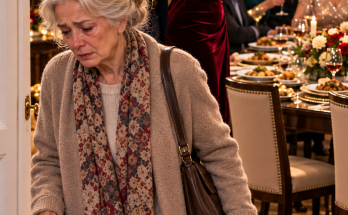
The permanent CEO search took longer than the board had hoped.
There were candidates with impressive résumés, but the directors wanted someone who could rebuild confidence without repeating the habits that had created the crisis.
I attended the relevant meetings and helped assess the candidates' understanding of financial controls, corporate governance, and long-term development.
This time, I paid attention to how they answered difficult questions.
One candidate spoke confidently about expansion but had little patience for the details behind his forecasts.
Another admitted that certain assumptions needed verification before he could recommend a decision.
I preferred the second answer.
A company did not need another person who could make uncertainty sound like certainty.
It needed someone who could recognize the difference.
During the transition, I continued reviewing the company's financial position with the finance team.
The suspicious transactions remained under investigation, and the company had to assess their impact on its obligations and projects.
I didn't want employees to discover a problem after a decision had already been made.
I also didn't want the company to make promises it could not support.
We worked through the information carefully.
There were difficult days.
Some projects required new financing arrangements.
Some contractual questions took longer than expected to resolve.
The legal team needed time to determine which losses could be quantified and which claims could be pursued.
I learned to accept that responsible leadership often looked slow from the outside.
That was better than being fast and wrong.
At home, I began clearing out some of the things I had kept from the marriage.
Not everything.
I wasn't interested in erasing twenty-four years simply because the ending had been painful.
There had been good moments.
There had been ordinary mornings when Richard made coffee while I read the newspaper.
There had been holidays when the children were small and we sat on the floor surrounded by wrapping paper.
There had been evenings when we discussed the company as partners, before success changed the balance between us.
Those memories belonged to my life too.
But I no longer needed to keep every object as proof that the life had once been real.
I sorted old documents into boxes.
I kept the records that mattered.
I discarded things that no longer served a purpose.
The blue folder remained separate.
It was not a souvenir of my marriage.
It was part of the evidence preserved for the investigation, and I treated it accordingly.
The jewelry box was different.
I kept it.
I still hoped the earrings would be returned through the appropriate process.
Until then, the empty box reminded me of something I had nearly forgotten: sentimental value did not make an object less worthy of protection.
The same was true of my time.
The same was true of my work.
And the same was true of the relationships I chose to maintain.
Emily began asking more questions about our marriage.
Sometimes she wanted details.
Sometimes she simply wanted to understand why I had seemed so calm during the divorce.
I told her that calmness was not the same as peace.
There had been nights when I lay awake wondering whether I had made the right decisions.
There had been mornings when I went to work feeling exhausted before the day began.
There had been moments when I wanted to confront Richard publicly but chose not to because I feared the consequences for the company and the children.
“I thought you were stronger than everyone,” Emily said once.
“I was strong in some ways.”
I folded a towel and placed it on the shelf.
“But I was also afraid of what would happen if I stopped managing everything.”
She considered that.
“Did you ever want us to ask what was wrong?”
“Yes.”
The answer came out more quickly than I expected.
I looked at her.
“I wanted you to notice. But I also worked very hard to make sure you didn't have to.”
She swallowed.
“That must have been confusing.”
“It was.”
For years, I had wanted my children to recognize the sacrifices I made without having to see the pain behind them.
I had wanted them to understand me without forcing them to confront their father.
That was not a reasonable thing to expect.
I had tried to control what they knew because I wanted to control what they felt.
I could see that now.
I wasn't going to repeat it.
If Emily asked a question I could answer, I would answer it.
If the information belonged to the investigation, I would explain why I couldn't discuss it.
If she misunderstood something, I would correct her without demanding that she agree with me immediately.
It was a more difficult way to live.
It was also more honest.
Noah approached things differently.
He began reading about the company's governance structure and asked me to explain how voting shares worked.
I showed him the relevant documents that I was permitted to discuss.
I explained that ownership, executive authority, and board oversight were separate responsibilities.
Having thirty-eight percent of the voting shares did not mean I could act without the other directors.
Being appointed interim executive chair did not mean I personally controlled every part of the business.
And having evidence of possible misconduct did not mean I could decide the legal outcome.
Noah listened carefully.
“So the process matters even when everyone thinks they know what happened.”
“Especially then.”
He nodded.
I could see him thinking about his father's behavior.
I didn't tell him what conclusion to reach.
He had to understand the distinction for himself.
A few weeks later, Dana called with an update about the ongoing case.
The authorities were continuing to examine the financial records and the suspected offenses.
The company was cooperating.
There was still no reason to assume that every question had been resolved.
I thanked her and returned to my work.
I had learned not to let every update determine the shape of my day.
The investigation mattered.
So did the company.
So did my family.
But my life could not remain suspended until every question had an answer.
I needed to build something beyond the crisis.
I began meeting with women involved in housing development.
Some had years of experience but had struggled to obtain financing.
Others had strong local partnerships and practical plans but lacked the investor connections that larger firms took for granted.
I listened to their proposals.
I asked about budgets, construction timelines, risks, and the people who would eventually live in the homes.
I did not promise funding before reviewing the numbers.
That would have contradicted everything I believed about responsible investment.
But I found myself excited by the work in a way I had not felt for years.
It reminded me of the earliest days of Vale Urban, when the company was still a plan on paper and every new partnership felt possible.
Back then, I had believed that careful work and good judgment could create something lasting.
Richard's behavior had not destroyed that belief.
It had made me more cautious about who received the credit and who held the power.
I could use that caution well.
At the company, the board continued working toward a permanent leadership appointment.
The independent review had become part of a broader effort to strengthen financial controls and prevent similar problems in the future.
I supported that work.
I wanted Vale Urban to survive, but not at the cost of pretending the past had been acceptable.
The employees deserved a company that could admit mistakes and correct them.
The investors deserved accurate information.
The people who bought homes through our developments deserved to know that the business behind those homes took its obligations seriously.
And I deserved to work without being treated as an inconvenience whenever I asked a difficult question.
That was not revenge.
It was the standard I should have insisted on years earlier.
One evening, I found myself looking at the old Christmas photograph again.
Richard had posted it in the family chat before the investigation became public.
Vanessa stood beside the dining table.
Emily and Noah smiled at the camera.
The gold decorations reflected the light.
I had saved the image because it reminded me of the moment I understood how completely Richard had rewritten our family history.
Now I looked at it differently.
I could see two adult children who had been told a version of events that made their father's life easier.
I could see a woman trying to belong in a family whose history she may not have fully understood.
And I could see Richard, standing behind them, presenting the scene as proof that he had successfully moved on.
I no longer needed the photograph to remind me that I had been excluded.
I knew what had happened.
I also knew that the photograph had not captured the whole truth.
I deleted the copy from my phone.
The original record remained preserved where it needed to be for the legal matters concerning the jewelry and the company's records.
I didn't need to carry it around as a personal wound.
The following weekend, Noah came to dinner.
Emily joined us later.
We ate at the kitchen table, and the conversation moved from work to family to a television program neither of them particularly liked.
For a while, everything felt ordinary.
Then Emily looked at me.
“Are you going to spend Christmas with us this year?”
I set down my fork.
The question brought me back to the grocery store.
I remembered the wine bottle.
I remembered the refrigerators humming above the sound of her voice.
I remembered how quickly I had agreed not to come because I thought making things easy for her was the same as being a good mother.
I took a breath.
“If we're going to spend Christmas together, I want us to be honest about what happened.”
Emily nodded.
“I understand.”
“I don't want to be invited because someone feels guilty. I want to be welcome because you want me there.”
“I do want you there.”
I looked at Noah.
He nodded too.
“Then we can talk about it properly,” I said.
It wasn't a dramatic reconciliation.
Nobody stood up and delivered a speech.
We didn't pretend that the previous Christmas had never happened.
But we were finally discussing the next one without asking anyone to disappear.
After dinner, I walked Emily to the door.
She hugged me before leaving.
I held her for a moment longer than usual.
I still loved my daughter.
That had never been the question.
The question was whether we could build a relationship in which love did not require me to make myself smaller.
For the first time in years, I thought we might.
When the door closed, I returned to the kitchen and began clearing the table.
The plates were ordinary.
The glasses were ordinary.
There were no cameras, no staged decorations, and no need to prove to anyone that our family was happy.
I washed the dishes and placed them in the rack.
Then I switched off the kitchen light.
The future was still uncertain.
The investigation had not finished.
The legal proceedings remained unresolved, and the company still had work ahead of it.
But I was no longer waiting for Richard to admit that I had mattered.
I knew what I had built.
I knew what I had preserved.
And I knew that whatever happened next, I would not have to disappear to make someone else feel welcome.
Source: kaylestore.net
Click here to continue reading: PART 9: The First Christmas Invitation I Accepted Came With One Condition: Nobody Would Ask Me to Pretend Nothing Had Happened
My Daughter Uninvited Me From Christmas, and I Realized My Family Had Forgotten Who Paid for the Life They Loved
Part 8 of 12